
Garage woodworking dust collector
A useful search when chip volume and tool size are starting to outrun normal shop-vac workflows.

Garage Bench Co.
Serious DIY garage workshop guidance
Buying guide
Choose a dust collector around the woodworking machine with the greatest airflow requirement, then check the duct route and filtration. A large collector and a small shop vacuum serve different kinds of tool connections.
Written by
Updated
August 18, 2026
Best use
This page is for serious DIY homeowners, weekend woodworkers, and prosumer garage users who need a tool or setup that works in a real garage rather than a full dedicated production shop.
Quick answer
Choose a dust collector around the woodworking machine with the greatest airflow requirement, then check the duct route and filtration. A large collector and a small shop vacuum serve different kinds of tool connections.
Who this guide is for
This page is for serious DIY homeowners, weekend woodworkers, and prosumer garage users who need a tool or setup that works in a real garage rather than a full dedicated production shop.
The Garage Bench Co. angle
Choose tools around the projects you do, the room available, and the setup you can maintain.
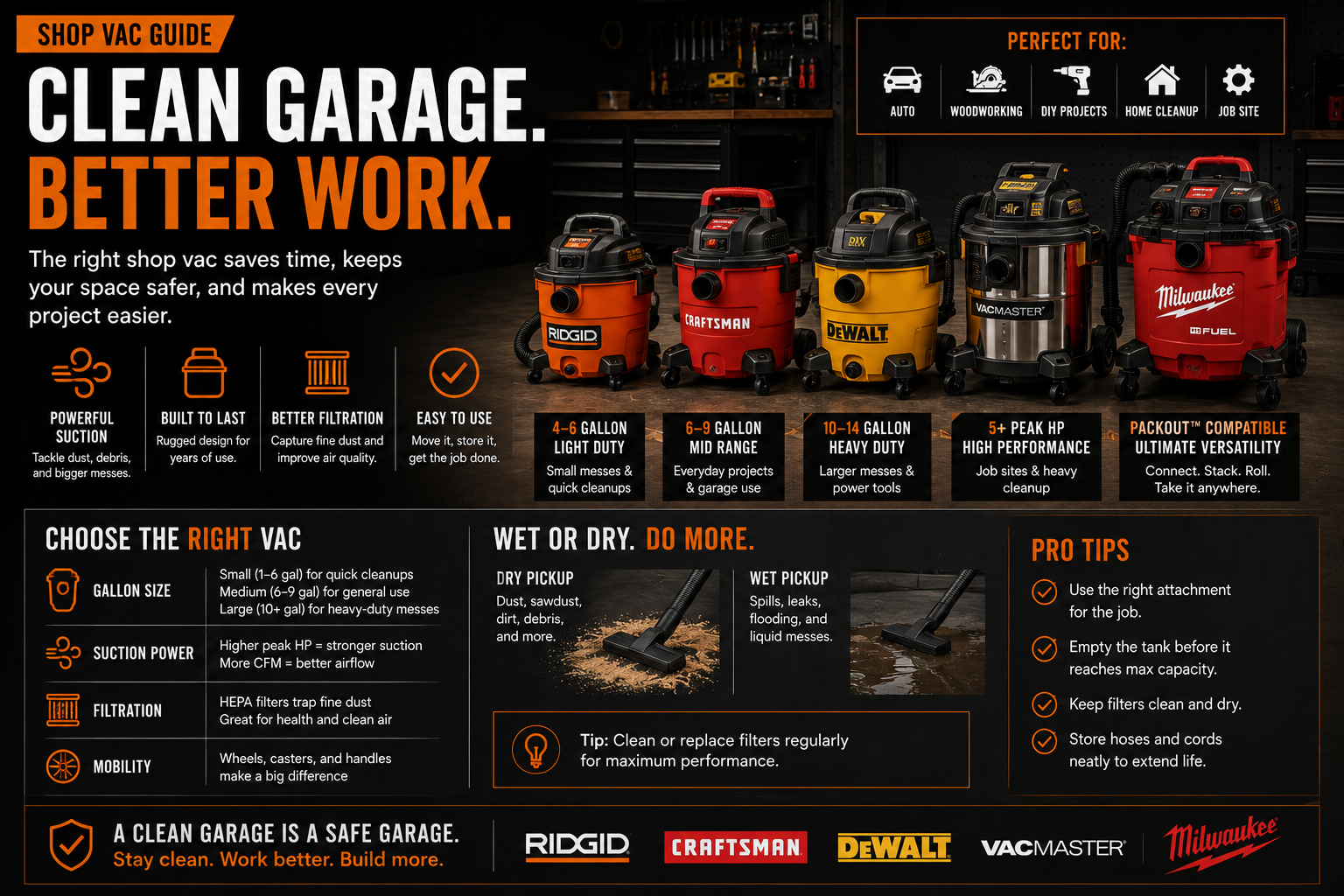
Cleanup choices shape the whole garage
| Your situation | Start with | Tradeoff to check |
|---|---|---|
| Large ports on stationary machines | Appropriately sized dust collector | Check the machine manual and realistic duct losses |
| Small ports on sanders or track saws | Tool-compatible dust extractor | A large collector is not automatically a useful match |
| One machine at a time | Short hose and movable collection setup | Reset time and hose routing matter |
| Permanent multiple-machine shop | Planned ducting and suitable collector | Avoid sizing from advertised free-air CFM alone |
List each machine, its port size, and its collection guidance. Then identify whether one or several tools run at the same time. This describes the job the system must do more usefully than tank size, horsepower, or one headline airflow number.
Moving chips out of the way is not the same as controlling the fine dust that matters for exposure. Compare the complete collector configuration, filter information, collection container, and servicing procedure. A separator can reduce the load reaching a filter but does not replace it.
Long flexible hoses, tight bends, and improvised reductions change the system. A shorter route to the active machine can be a better starting point for a small garage than a complicated network with weak collection at every port.
No. A separator removes some debris before the filter; it is not a substitute for the filtration and collection requirements of the complete system.
This is a research-based buying guide. Product references help you compare current specifications and instructions; no independent hands-on test ranking is claimed.
Manufacturer details checked October 4, 2026. Verify the exact model and package before purchasing.
Product searches
These links open Amazon searches for the products or categories discussed here. Compare exact models, package contents, sellers, and current prices before buying.
Disclosure: these are Amazon affiliate links. If you use one, Garage Bench Co. may earn a commission at no extra cost to you.
A useful search when chip volume and tool size are starting to outrun normal shop-vac workflows.

A good search path when filters keep clogging and you want a cleaner sawdust workflow.

A strong comparison search for the airborne-dust layer that lingers after sweeping and vacuuming end.
Read next
The hub ties shop vacs, dust extractors, filters, cyclone setups, air filtration, and garage cleanup workflow back together.