Spec that matters
CFM:
airflow volume, useful for moving dust and debris.

Garage Bench Co.
Serious DIY garage workshop guidance
Buying guide
The best dust extractor for a garage workshop has HEPA-class filtration or certified filtration where needed, tool-triggered operation, auto-clean or good filter management, anti-static hose options, and enough airflow/water lift for the tools you use.
Written by
Garage Bench Co. Editorial Team
Updated
May 10, 2026
Best use
Woodworkers, remodelers, sanders, track-saw users, concrete/drilling users, and garage shops that generate fine dust.
Quick answer
The best dust extractor for a garage workshop has HEPA-class filtration or certified filtration where needed, tool-triggered operation, auto-clean or good filter management, anti-static hose options, and enough airflow/water lift for the tools you use.
Who this guide is for
Woodworkers, remodelers, sanders, track-saw users, concrete/drilling users, and garage shops that generate fine dust.
The Garage Bench Co. angle
Dust extractors are for tool-connected fine dust, not just bigger/fancier shop vacs.
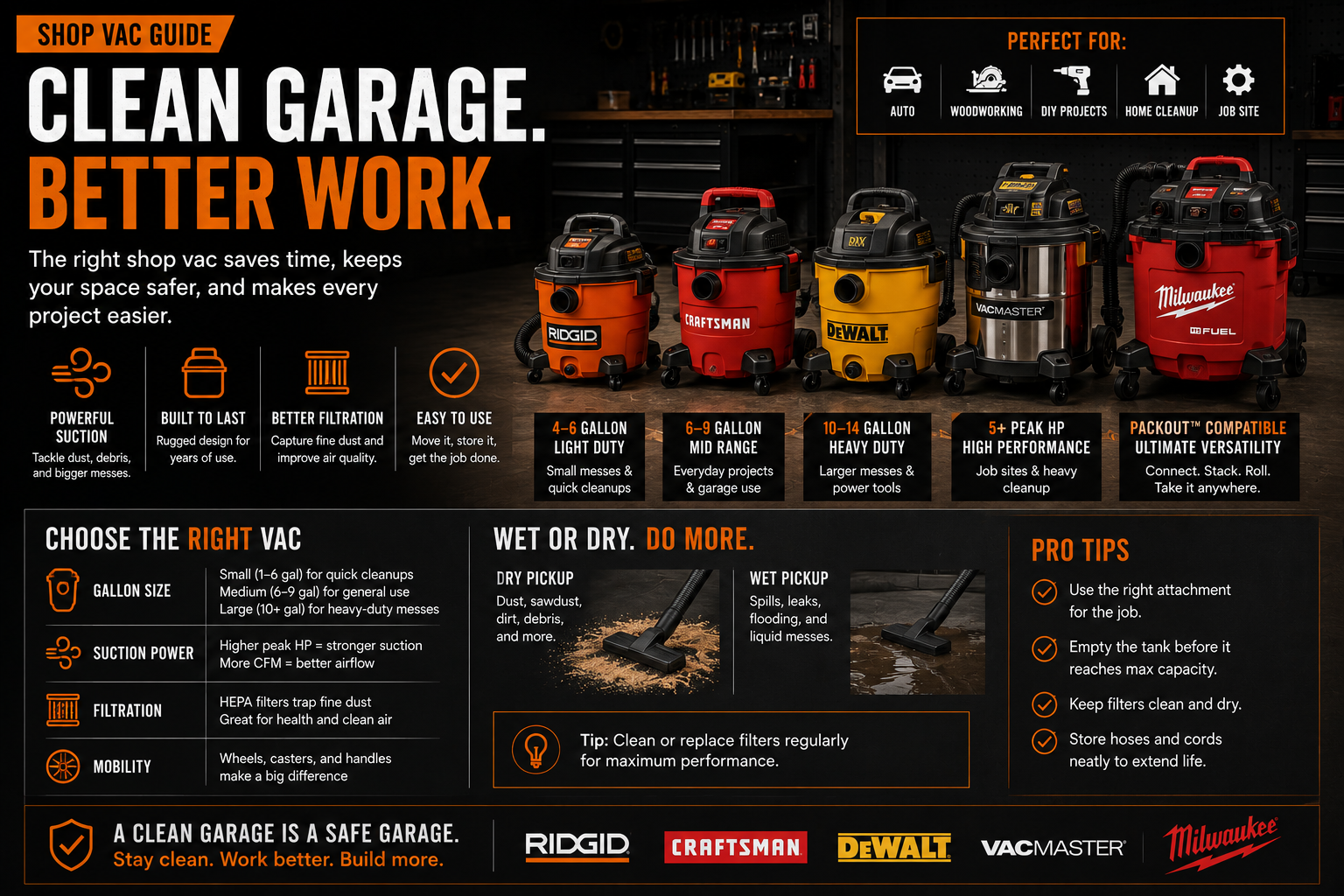
Cleanup choices shape the whole garage
A dust extractor is built to connect to tools and capture fine dust while you work. It often adds better filtration, tool-triggered start, anti-static hoses, filter cleaning, and dust bags.
A dust extractor is built to connect to tools and capture fine dust while you work. It often adds better filtration, tool-triggered start, anti-static hoses, filter cleaning, and dust bags.
Buy a dust extractor if you sand, cut indoors, use track saws, route, drill concrete, or care about fine dust capture. The more the tool creates airborne dust, the more extraction matters.
Look at airflow, static water lift, filtration, bag/filter system, hose diameter, auto-start, noise, and how well it connects to your tools. CFM alone does not tell the whole story.
For general debris, car cleanup, wet messes, and occasional sawdust piles, a shop vac can be the better value. Dust extractors shine when connected to tools, not when eating loose bolts from the floor.
| Cleanup Need | Best Tool Type | Why |
|---|---|---|
| General garage debris | Mid-size corded wet/dry vac | Strong suction, large capacity, inexpensive filters/accessories |
| Small homeowner cleanup | Small portable wet/dry vac | Easier to store, carry, and use for quick messes |
| Car interiors | Portable vac or wall-mounted vac with long hose | Better reach, crevice tools, and convenient storage |
| Sawdust from small tools | Shop vac + fine filter + bag/cyclone | Keeps the filter cleaner and improves sustained suction |
| Fine sanding dust | Dust extractor or shop vac with HEPA/fine filter and bag | Fine dust needs better filtration and tool connection |
| Heavy woodworking chips | Dust collector or cyclone-assisted system | Larger chips and volume exceed normal shop vac comfort |
| Wet messes | Wet/dry vac with proper wet filter/setup | Dry filters and paper bags are not for wet pickup |
| Attached garage quiet cleanup | Quiet shop vac or dust extractor | Noise matters when cleanup happens often |
| Tool-triggered dust capture | Dust extractor | Auto-start, anti-static hose, filtration, and sustained airflow |
| Driveway/garage floor washdown | Pressure washer | Outdoor cleaning needs water pressure and flow, not vacuum suction |
| Filter / Add-On | Best For | Watch-Out |
|---|---|---|
| Standard/general debris filter | Dirt, sawdust, common garage debris | Not ideal for fine drywall/sanding dust |
| Fine dust filter | Sawdust, cold ash, fine powder, dustier cleanup | Usually dry pickup only; check model guidance |
| HEPA-rated filter | Fine particulate capture when compatible | Filter rating does not make the whole vac a certified dust extractor |
| Foam/wet filter | Wet pickup | Remove dry paper filters/bags when required by manual |
| Dust bag | Easier debris disposal and cleaner filter life | Must match vac model and debris type |
| Cyclone separator | Sawdust, chips, drywall dust, keeping filters cleaner | Adds footprint, hose length, and airflow restriction |
| Dust extractor fleece bag | Tool dust and cleaner disposal | Usually more expensive than shop vac bags |
| Pre-separator | High-volume dust/chips before extractor/vac | Needs space and proper hose setup |
| Dust Source | Better Control | Garage Bench Co. Take |
|---|---|---|
| Miter saw | Dust extractor/shop vac at tool + cleanup vac | Hard to capture fully; plan for sweeping/vacuuming too |
| Random orbital sander | Dust extractor or high-filtration vac + proper hose | Fine dust needs capture at the tool |
| Table saw | Dust collector for large-volume chips; vac for blade-guard/top collection | A shop vac alone is not a full table-saw dust solution |
| Router | Dust extractor/shop vac at port plus cleanup | Small port, high-speed fine dust needs good capture |
| Drywall dust | Fine/HEPA filter + bag/cyclone; avoid standard filters | Clogs filters quickly and needs careful handling |
| Car interiors | Crevice tools, brushes, long hose, compact vac | Convenience beats giant tank size |
| Wet floor mess | Wet/dry vac in wet setup | Switch filters before wet pickup |
| Concrete/silica dust | Dedicated compliant dust extraction/PPE | Do not treat hazardous dust like normal sawdust |
Spec that matters
airflow volume, useful for moving dust and debris.
Spec that matters
useful for heavier pickup and restrictive hoses/attachments.
Spec that matters
larger hoses move chips and debris; smaller hoses fit tools and crevices.
Spec that matters
match the filter to general debris, fine dust, HEPA needs, or wet pickup.
Spec that matters
cleaner disposal and better filter life for many dry dust tasks.
Spec that matters
protects the vac filter during dusty/chippy cleanup.
Spec that matters
reduces emptying but increases footprint.
Spec that matters
decides whether the vac supports long cleanup or quick grab-and-go messes.
Spec that matters
matters in attached garages and small spaces.
Spec that matters
cleanup happens more often when nozzles and hoses are easy to find.
Spec that matters
wet pickup, hazardous dust, and filters must follow the actual vacuum instructions.
Mistake to avoid
Buying by peak HP alone.
Mistake to avoid
Using a standard filter for fine drywall or sanding dust.
Mistake to avoid
Forgetting bags, filters, hoses, and accessories in the budget.
Mistake to avoid
Treating a cordless vac like it has infinite runtime.
Mistake to avoid
Vacuuming wet messes with the wrong dry setup.
Mistake to avoid
Assuming a HEPA-rated filter makes the entire vac safe for hazardous dust.
Mistake to avoid
Skipping cyclone separators when filters clog constantly.
Mistake to avoid
Using pressure washers without thinking through surface damage and water drainage.
Keep dust control boring and safe
Safe affiliate shortlist
These are verified Amazon product cards matched to the cleanup, filtration, dust-control, and garage-washing roles discussed here.
Disclosure: these are Amazon affiliate links. If you use one, Garage Bench Co. may earn a commission at no extra cost to you.

A verified dust extractor listing for tool-connected dust capture and cleaner sanding/routing work.

A verified hose kit listing for connecting sanders and small tools to a vac or extractor.
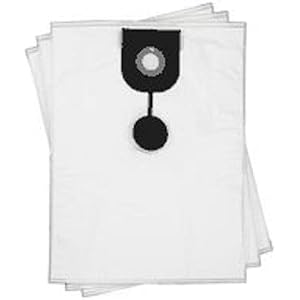
A verified fleece bag listing for compatible DEWALT dust extractors.
For tool-connected fine dust, yes. For general garage cleanup, a shop vac may be better value.
For fine dust or hazardous dust, higher filtration may be needed. Verify the extractor and job requirements.
The extractor turns on when a connected power tool starts.
Many are quieter, but compare actual decibel specs.
This article was drafted from the Garage Bench Co. topical dominance plan and supported by official manufacturer pages, dust-control guidance, safety guidance, and buyer-pain research. Before publication, verify exact live product data, current pricing, availability, affiliate URLs, specs, filter compatibility, and manual-specific maintenance instructions.
Read next
The hub ties shop vacs, dust extractors, filters, cyclone setups, air filtration, and garage cleanup workflow back together.