Spec that matters
Mobility:
Does the system move, or does it stay in the garage?
Garage Bench Co.
Serious DIY garage workshop guidance
Buying guide
The best modular storage for home mechanics usually combines drawer access, socket organizers, shallow small-parts boxes, a rolling cart or tool chest, and only enough modular boxes for tools that travel.
Written by
Updated
August 18, 2026
Best use
DIY mechanics organizing sockets, ratchets, impact wrenches, torque wrenches, lights, fluids, and small parts.
Quick answer
The best modular storage for home mechanics usually combines drawer access, socket organizers, shallow small-parts boxes, a rolling cart or tool chest, and only enough modular boxes for tools that travel.
Who this guide is for
DIY mechanics organizing sockets, ratchets, impact wrenches, torque wrenches, lights, fluids, and small parts.
The Garage Bench Co. angle
Home mechanics need drawers, sockets, lights, small-parts organization, and fast access more than deep boxes stacked like a plastic skyscraper.
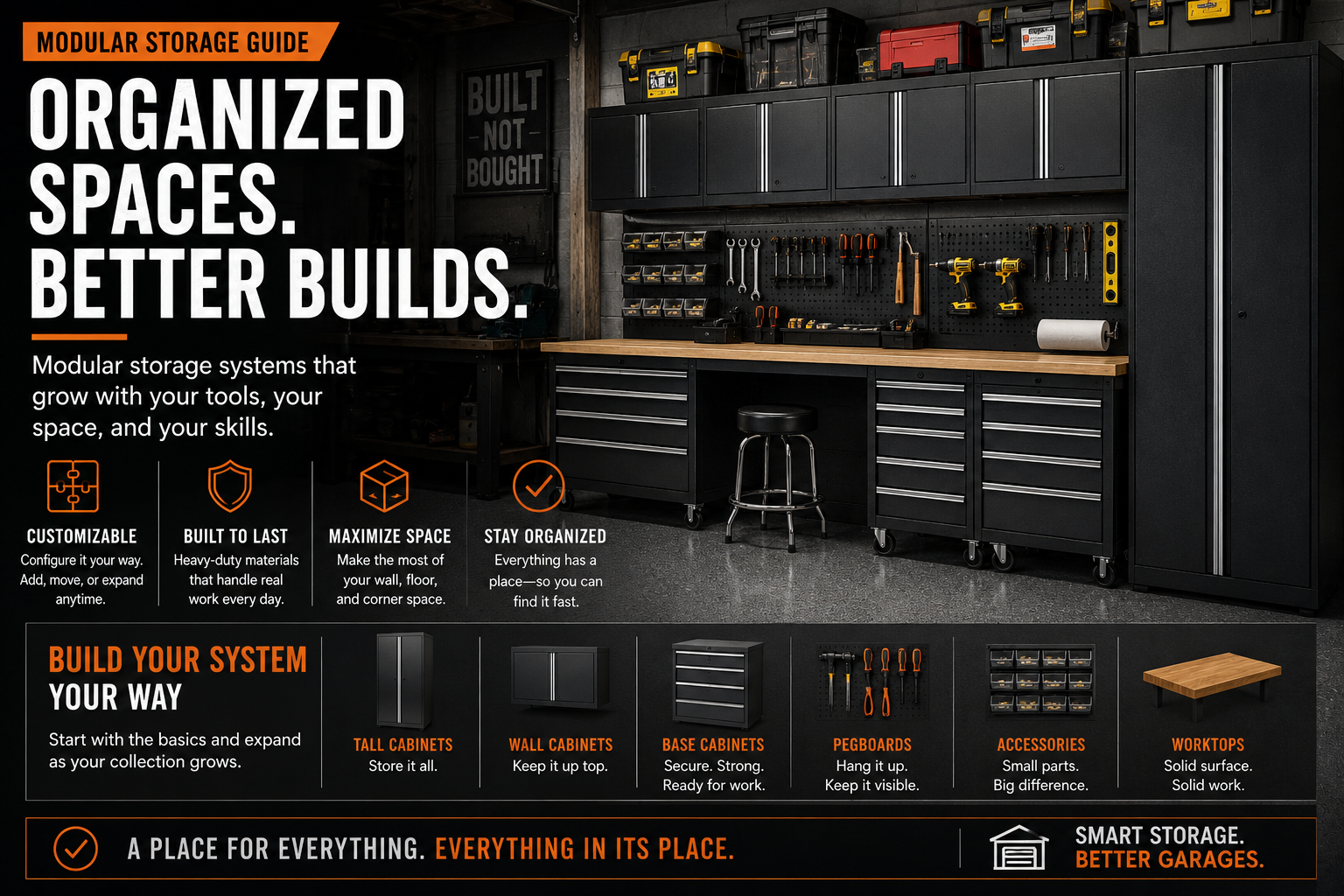
Storage decisions change daily workflow
Mechanic tools involve small parts, sockets, extensions, ratchets, torque tools, specialty pullers, and greasy accessories. Deep boxes are not ideal for everything. Drawers and shallow organizers often win.
Mechanic tools involve small parts, sockets, extensions, ratchets, torque tools, specialty pullers, and greasy accessories. Deep boxes are not ideal for everything. Drawers and shallow organizers often win.
A rolling cart or drawer-based modular stack is useful if you work around vehicles and need tools next to the job. Drawer boxes beat stacked lids when you need repeated access during a brake or suspension job.
For a stationary home garage, a tool chest or cabinet with socket organizers and a dedicated impact-wrench/battery zone is usually more efficient than a full mobile modular tower.
Separate sockets, impact sockets, bits, fasteners, fluids, diagnostic tools, electrical supplies, and small parts. If everything shares one box, congratulations: you built a treasure hunt nobody wanted.
Compare equipment types in our topic overview. Then use the advice here for your specific decision.
Spec that matters
Does the system move, or does it stay in the garage?
Spec that matters
Can you reach tools without unstacking half the system?
Spec that matters
Deep boxes protect bulky tools but can hide small items.
Spec that matters
Drawers matter for sockets, bits, accessories, and frequent access.
Spec that matters
Wall rails and mounts can save more space than another rolling box.
Spec that matters
Wall systems, shelves, drawers, and rolling boxes all have limits.
Spec that matters
A system is only useful if the pieces you need are available.
Spec that matters
Cordless tools need batteries, chargers, and cord control planned into storage.
Mistake to avoid
Buying a heavy modular tower when tools never leave the garage.
Mistake to avoid
Hiding daily-use tools in deep boxes.
Mistake to avoid
Ignoring small-parts storage until every project turns into a scavenger hunt.
Mistake to avoid
Mounting wall storage without checking studs, fasteners, and load limits.
Mistake to avoid
Forgetting batteries and chargers when planning power tool storage.
Mistake to avoid
Buying into a storage system without checking current availability of future pieces.
Keep the storage system boring and safe
Product searches
These links open Amazon searches for the products or categories discussed here. Compare exact models, package contents, sellers, and current prices before buying.
Disclosure: these are Amazon affiliate links. If you use one, Garage Bench Co. may earn a commission at no extra cost to you.
Compare drawer-heavy mobile systems before you bury sockets and hand tools in deep boxes.
A good search when mechanic storage is really about fast access to repeat-use hand tools.
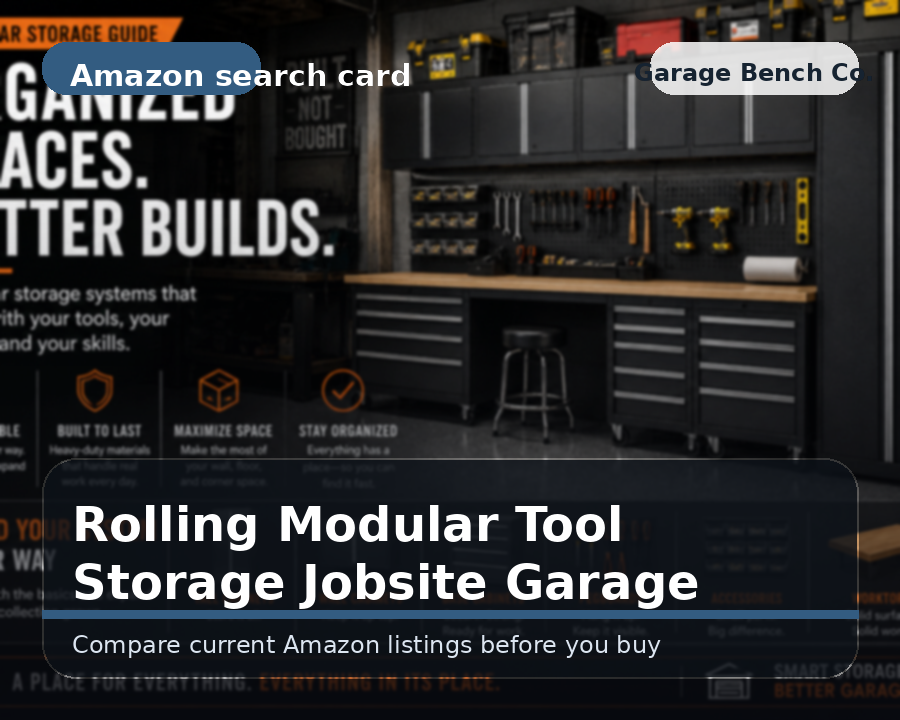
Use this to compare the transport-focused systems that make sense only if your tools actually move.
Yes for mobile work, but drawers and socket organizers are often better for daily access.
A tool chest is usually better for stationary socket and hand-tool storage. Modular boxes are better for transport.
Sockets, ratchets, wrenches, extensions, pliers, torque tools, and specialty hand tools.
Use labeled rails, trays, or shallow drawers that separate sizes clearly.
It can be, especially with drawer units and organizers, but it may be more than some home garages need.
This guide draws on the linked manufacturer documentation, official safety guidance, and primary technical references. Product details can change, so confirm current specifications and instructions with the manufacturer before buying or using equipment.
Read next
The hub ties modular storage, wall organization, charging zones, small-parts storage, and garage workflow back together.