Spec that matters
CFM:
airflow volume, useful for moving dust and debris.

Garage Bench Co.
Serious DIY garage workshop guidance
Buying guide
The best small shop vac for homeowners is compact, easy to carry, easy to store, strong enough for quick wet/dry messes, and compatible with filters and attachments that fit actual household and garage cleanup.
Written by
Updated
August 18, 2026
Best use
Homeowners cleaning cars, workbenches, small spills, sawdust piles, closets, laundry areas, and quick garage messes.
Quick answer
The best small shop vac for homeowners is compact, easy to carry, easy to store, strong enough for quick wet/dry messes, and compatible with filters and attachments that fit actual household and garage cleanup.
Who this guide is for
Homeowners cleaning cars, workbenches, small spills, sawdust piles, closets, laundry areas, and quick garage messes.
The Garage Bench Co. angle
Small vacs win when convenience matters more than tank size.
Cleanup choices shape the whole garage
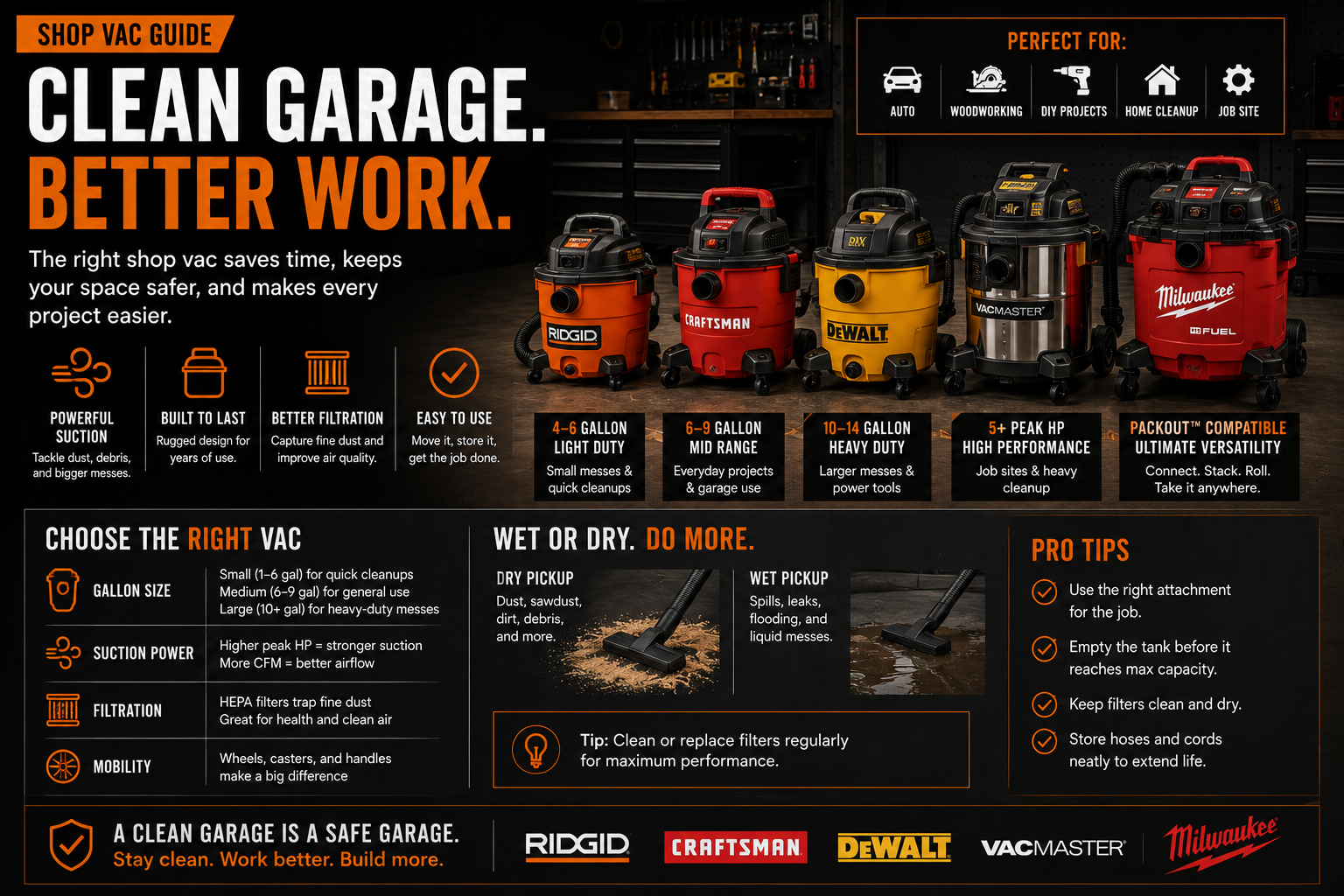
A small shop vac gets used because it is easy to grab. For homeowners, that often matters more than giant tank capacity. The vac that lives under a shelf and comes out fast beats the monster vac trapped behind holiday decorations.
A small shop vac gets used because it is easy to grab. For homeowners, that often matters more than giant tank capacity. The vac that lives under a shelf and comes out fast beats the monster vac trapped behind holiday decorations.
Small wet/dry vacs are great for car interiors, small leaks, sawdust around a bench, drill messes, closet/laundry cleanup, quick spills, and portable project cleanup.
Small vacs are not ideal for major woodworking cleanup, long runs with power tools, heavy drywall dust, or large wet messes. Capacity and filter area run out quickly.
Look for hose storage, stable base, good filter options, easy emptying, crevice tools, brush tools, and a cord/hose long enough for cars and benches.
Compare equipment types in our topic overview. Then use the advice here for your specific decision.
Spec that matters
airflow volume, useful for moving dust and debris.
Spec that matters
useful for heavier pickup and restrictive hoses/attachments.
Spec that matters
larger hoses move chips and debris; smaller hoses fit tools and crevices.
Spec that matters
match the filter to general debris, fine dust, HEPA needs, or wet pickup.
Spec that matters
cleaner disposal and better filter life for many dry dust tasks.
Spec that matters
protects the vac filter during dusty/chippy cleanup.
Spec that matters
reduces emptying but increases footprint.
Spec that matters
decides whether the vac supports long cleanup or quick grab-and-go messes.
Spec that matters
matters in attached garages and small spaces.
Spec that matters
cleanup happens more often when nozzles and hoses are easy to find.
Spec that matters
wet pickup, hazardous dust, and filters must follow the actual vacuum instructions.
Mistake to avoid
Buying by peak HP alone.
Mistake to avoid
Using a standard filter for fine drywall or sanding dust.
Mistake to avoid
Forgetting bags, filters, hoses, and accessories in the budget.
Mistake to avoid
Treating a cordless vac like it has infinite runtime.
Mistake to avoid
Vacuuming wet messes with the wrong dry setup.
Mistake to avoid
Assuming a HEPA-rated filter makes the entire vac safe for hazardous dust.
Mistake to avoid
Skipping cyclone separators when filters clog constantly.
Mistake to avoid
Using pressure washers without thinking through surface damage and water drainage.
Keep dust control boring and safe
Product searches
These are verified Amazon product cards matched to the cleanup, filtration, dust-control, and garage-washing roles discussed here.
Disclosure: these are Amazon affiliate links. If you use one, Garage Bench Co. may earn a commission at no extra cost to you.

A verified Shop-Vac wet/dry vacuum listing that fits the mid-size garage cleanup role.

A verified Shop-Vac filter bag listing for cleaner dry pickup and better filter life.

A verified Dust Deputy cyclone separator listing for keeping sawdust and debris out of the vac filter.
It can be for quick cleanup, cars, and light messes, but heavier shop work may need a larger vac.
Usually around 2–6 gallons.
Yes for convenience, but runtime and suction may limit them.
Yes if it is a wet/dry vac and set up correctly for wet pickup.
This guide draws on the linked manufacturer documentation, official safety guidance, and primary technical references. Product details can change, so confirm current specifications and instructions with the manufacturer before buying or using equipment.
Read next
The hub ties shop vacs, dust extractors, filters, cyclone setups, air filtration, and garage cleanup workflow back together.