
Dust extractor with auto-start and HEPA-style filtration
Useful when tool-connected cleanup and fine-dust control matter more than general debris pickup.
Garage Bench Co.
Serious DIY garage workshop guidance
Guide
Match the tool’s collection requirements, the hose and adapter, and the vacuum’s approved filtration before connecting them. A physical connection alone does not show that the system will capture the dust adequately.
Quick answer
Match the tool’s collection requirements, the hose and adapter, and the vacuum’s approved filtration before connecting them. A physical connection alone does not show that the system will capture the dust adequately.
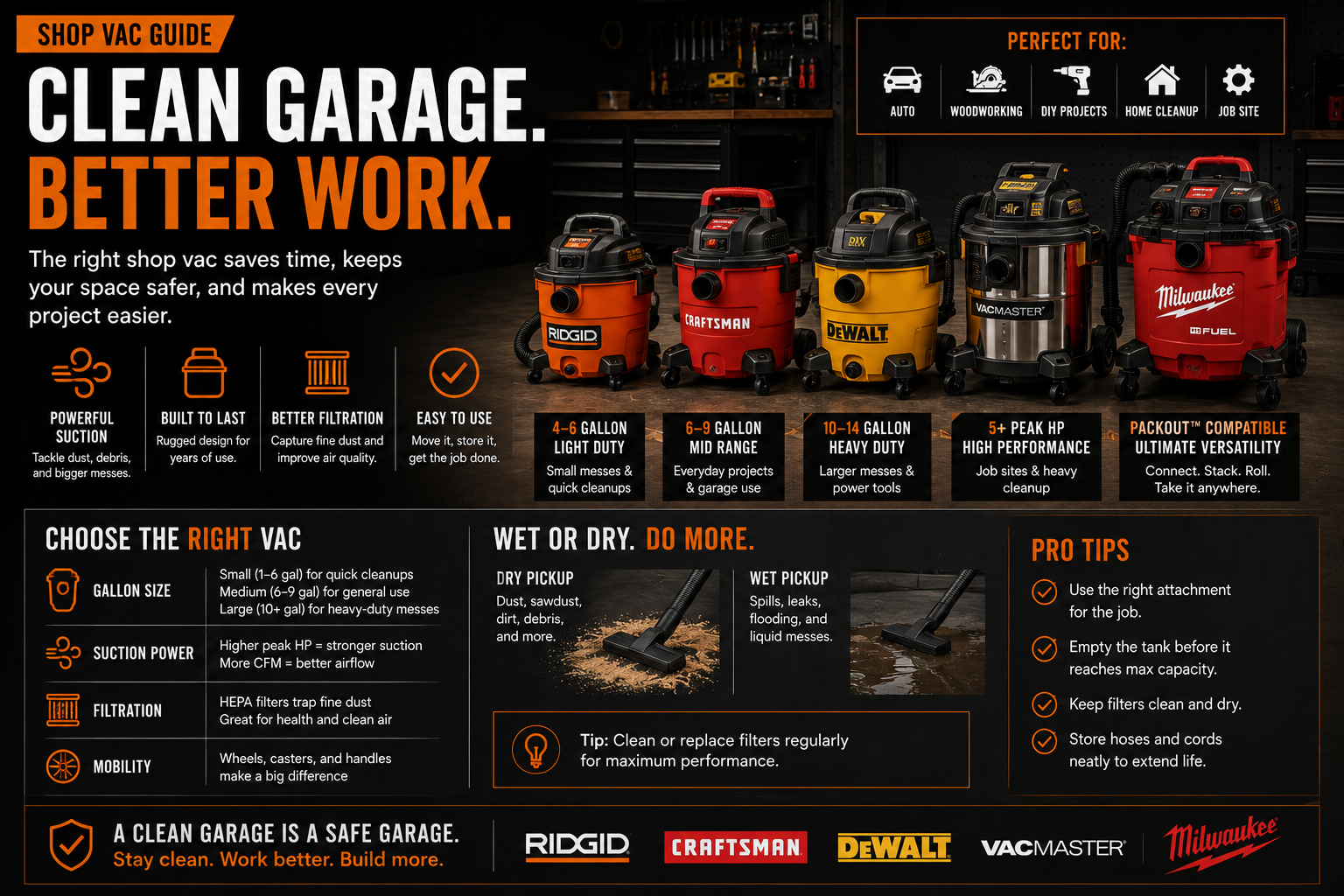
Cleanup choices shape the whole garage
Record the tool’s port diameter and manufacturer collection guidance. Sanders commonly use smaller ports; table saws can have different requirements. Do not force every machine through the same small hose because the reducer happens to fit.
Use a compatible adapter and a hose that remains attached throughout the tool’s movement. With power disconnected, check the full adjustment and travel range. Support the hose so it does not pull a sander, snag a guide rail, block the guard, or cross a walkway.
Use the filter and bag approved for the collected material and dry or wet mode. Inspect seals and keep airflow paths clear. Miter-saw ports capture only part of the thrown dust, so inspect the area after work and improve collection rather than assuming the hose makes the station complete.
This guide explains workflow and equipment tradeoffs; it does not claim hands-on product testing. For wood-dust controls and machine hazards, consult the OSHA woodworking guidance and your equipment instructions.
Product searches
These links open Amazon searches for the products or categories discussed here. Compare exact models, package contents, sellers, and current prices before buying.
Disclosure: these are Amazon affiliate links. If you use one, Garage Bench Co. may earn a commission at no extra cost to you.
Useful when tool-connected cleanup and fine-dust control matter more than general debris pickup.

A smart comparison search when hose friction, clogs, and awkward tool hookups are part of the frustration.

Helpful for cleaner disposal and better day-to-day extractor use before you commit to one exact bag system.
Read next
The hub ties shop vacs, dust extractors, filters, cyclone setups, air filtration, and garage cleanup workflow back together.