Spec that matters
Mobility:
Does the system move, or does it stay in the garage?
Garage Bench Co.
Serious DIY garage workshop guidance
Comparison guide
Choose drawer boxes for hand tools, sockets, bits, small parts, and tools you need while the stack stays assembled. Choose open crates for bulky items, quick-grab gear, cords, clamps, and loose project supplies.
Written by
Updated
August 18, 2026
Best use
Readers deciding which modular storage components to buy first.
Quick answer
Choose drawer boxes for hand tools, sockets, bits, small parts, and tools you need while the stack stays assembled. Choose open crates for bulky items, quick-grab gear, cords, clamps, and loose project supplies.
Who this guide is for
Readers deciding which modular storage components to buy first.
The Garage Bench Co. angle
Drawer boxes are for access and sorting; open crates are for bulky grab-and-go utility.
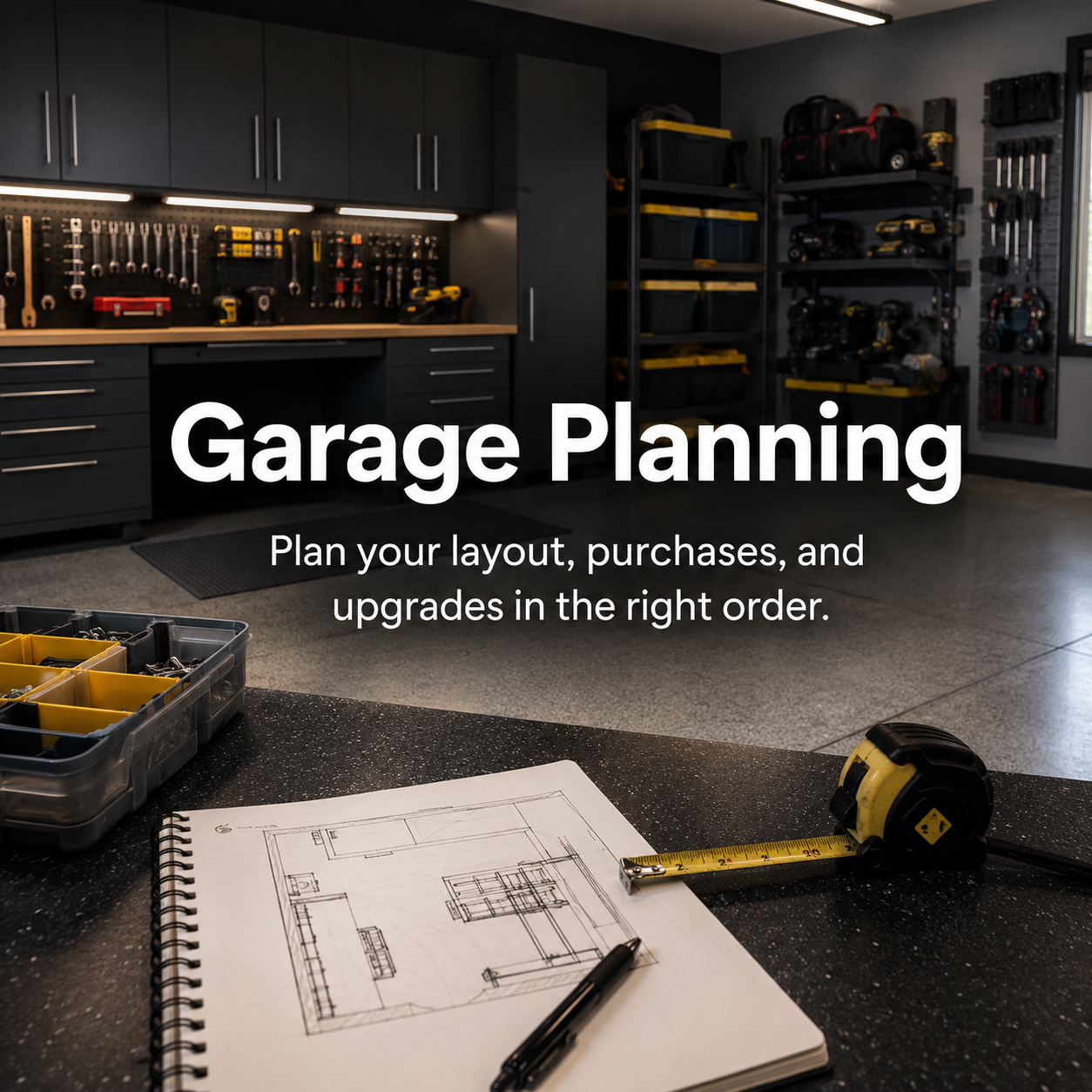
Storage decisions change daily workflow
Drawers win when you need access without unstacking. They are ideal for sockets, hand tools, impact accessories, bits, electrical supplies, and small project hardware.
Drawers win when you need access without unstacking. They are ideal for sockets, hand tools, impact accessories, bits, electrical supplies, and small project hardware.
Open crates are great for bulky items, odd shapes, cords, clamps, gloves, extension cords, fast-moving project supplies, and tools that do not need delicate sorting.
Traditional lidded boxes can be annoying when stacked because the tool you need is always in the bottom box. Drawers solve access. Crates solve speed. Deep boxes solve protection. Tiny choices, huge garage sanity impact.
Start with one drawer unit or shallow organizer for small tools, one crate for bulky project gear, and one lidded box for protected transport if tools move.
Compare equipment types in our topic overview. Then use the advice here for your specific decision.
Spec that matters
Does the system move, or does it stay in the garage?
Spec that matters
Can you reach tools without unstacking half the system?
Spec that matters
Deep boxes protect bulky tools but can hide small items.
Spec that matters
Drawers matter for sockets, bits, accessories, and frequent access.
Spec that matters
Wall rails and mounts can save more space than another rolling box.
Spec that matters
Wall systems, shelves, drawers, and rolling boxes all have limits.
Spec that matters
A system is only useful if the pieces you need are available.
Spec that matters
Cordless tools need batteries, chargers, and cord control planned into storage.
Mistake to avoid
Buying a heavy modular tower when tools never leave the garage.
Mistake to avoid
Hiding daily-use tools in deep boxes.
Mistake to avoid
Ignoring small-parts storage until every project turns into a scavenger hunt.
Mistake to avoid
Mounting wall storage without checking studs, fasteners, and load limits.
Mistake to avoid
Forgetting batteries and chargers when planning power tool storage.
Mistake to avoid
Buying into a storage system without checking current availability of future pieces.
Keep the storage system boring and safe
Product searches
These links open Amazon searches for the products or categories discussed here. Compare exact models, package contents, sellers, and current prices before buying.
Disclosure: these are Amazon affiliate links. If you use one, Garage Bench Co. may earn a commission at no extra cost to you.
A quick search for active-project storage that keeps screws, sockets, and bits from wandering off mid-job.

Great for comparing labeled organizers and drawer cabinets for fasteners, terminals, and repeat-use accessories.
Useful when the real problem is drawer discipline, not buying another big box.
Yes if you need access without unstacking boxes.
Bulky grab-and-go items, cords, clamps, gloves, and loose project supplies.
Usually yes, especially if the drawer is shallow and well organized.
No, but they provide less protection and sorting than boxes or drawers.
Buy based on what you store: drawers for small tools, crates for bulky gear.
This guide draws on the linked manufacturer documentation, official safety guidance, and primary technical references. Product details can change, so confirm current specifications and instructions with the manufacturer before buying or using equipment.
Read next
The hub ties modular storage, wall organization, charging zones, small-parts storage, and garage workflow back together.