Light homeowner use
2 batteries is usually enough
- Best for shelves, repairs, light garage upgrades, and occasional weekend work
- One in use, one ready or charging
- Usually no need to rush beyond this

Garage Bench Co.
Serious DIY garage workshop guidance
Cordless system planning
Most homeowners do not need a mountain of batteries. They need enough battery to keep the tools they actually use from becoming annoying. For many people, that means two good batteries to start, maybe a third later, and a charger setup that does not slow the whole garage down. The expensive mistake is assuming “more batteries” is always the same thing as “better setup.”
Written by
Garage Bench Co. Editorial Team
Updated
May 9, 2026
How to use this guide
Use the shortlist and tradeoffs below to find the best fit for your garage, then check the linked methodology, affiliate disclosure, and next-step guides if you want the deeper why behind the recommendation.
Quick answer
Disclosure: some product mentions below are affiliate links. If you use one of them, Garage Bench Co. may earn a commission at no extra cost to you. The recommendations still stay focused on what makes the most sense for your garage, budget, and next step.
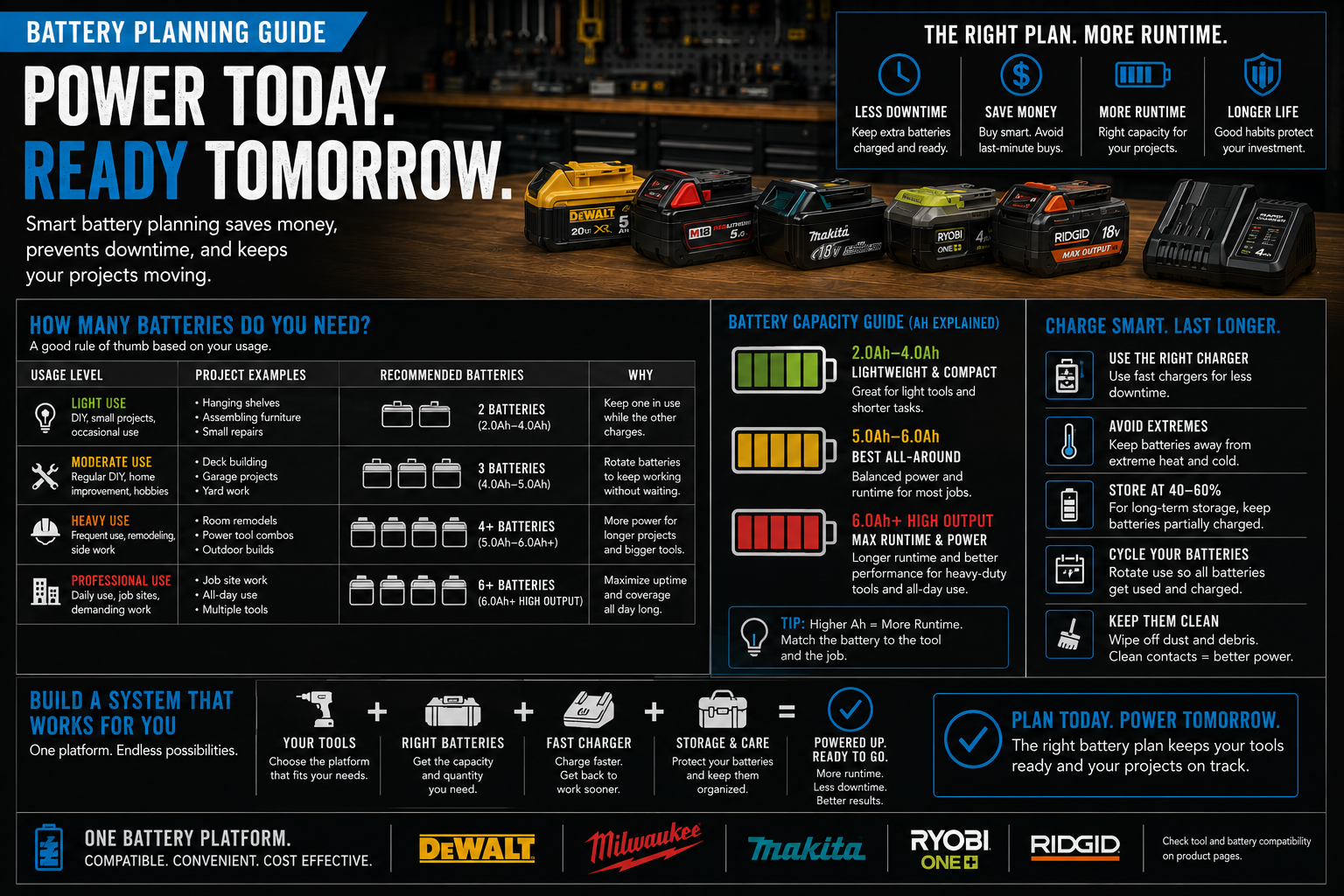
For most homeowners, two good batteries is enough to start, especially if one is in the tool while the other is charging or ready to swap. Active DIYers often benefit from a third. More serious garage users may want three or four batteries, but usually as a smarter mix of compact and larger packs, not four identical bricks. A rapid charger often improves the experience more than yet another battery, and a balanced pack like a 4Ah battery is usually a better first extra buy than jumping straight to the biggest pack available.
The easiest way to stop overbuying batteries is to think in tiers. Light homeowners usually do fine with two batteries. More active DIYers often want three. Serious garage users can justify four, but only if the use pattern is real and the charger situation supports it.
Light homeowner use
Active DIY use
Serious garage use
The best starter setup is usually two batteries that are actually useful, not two tiny packs that make your tools feel underfed. For many homeowners, that means a pair of decent mid-size batteries, often what comes in a better combo kit to begin with. After that, the next upgrade is usually one extra battery or a faster charger, depending on what is causing more friction.
If your current batteries feel annoying, the problem may be battery size, not battery count. A weak pack can make a decent tool feel worse than it is.
Two solid medium-size batteries, usually the kind that come with a better starter kit.
One more battery or one faster charger, depending on which problem is showing up first.
Buying several large packs before you understand which tools actually need them.
Bigger packs make the most sense on hungrier tools: saws, vacs, lights, blowers, and sometimes impact wrenches. They are less important on tools like drills and impact drivers when the work is lighter and more intermittent.
Bigger batteries can improve runtime and sometimes performance, but they also add size and weight. In a home garage, that tradeoff is worth it only when the tool actually benefits from it. Bigger is not universally better.
Compact batteries often make the core homeowner tools feel better in the hand. A drill or impact driver used for shelves, assembly, and lighter repair work can feel more balanced with a smaller pack. That is why a mixed battery setup is so often the best answer.
A compact pack for the everyday tools and a larger pack for the hungrier tools is often better than making everything wear a giant battery all the time.
A slow charger can make two batteries feel like one and a half. A faster charger can make two batteries feel perfectly fine. That is why charger quality matters more than many buyers expect.
If your garage setup is stalled by waiting, a rapid charger is often a better upgrade than blindly buying more battery count. Especially for homeowner use, charger speed can save money by reducing how many extra packs you actually need.
Best buying instinct
Buy enough battery to remove frustration, then stop. The goal is a smoother workflow, not a shelf full of expensive packs you barely rotate through.
Amazon product cards
These cards point to specific Amazon listings that fit the products and roles discussed here, so you can compare exact options instead of broad search results.
Disclosure: these are Amazon affiliate links. If you use one, Garage Bench Co. may earn a commission at no extra cost to you.

A balanced-size extra battery is usually the cleanest first expansion move for most homeowners.

A compact pack often makes drills and impact drivers nicer to live with for everyday homeowner tasks.

Best saved for hungrier tools and longer work sessions, not as the automatic default for everything.

A faster charger often improves the experience more than a fourth battery most homeowners will barely need.

Useful once the battery pile starts spreading, especially if you want the garage to stay tidy and repeatable.
Yes, usually. Two usable batteries is a strong starting point for most light to moderate homeowner use.
Often better batteries. If the current packs are too small or slow to recharge, better battery quality or charger speed can solve more than raw count.
One good charger is enough for many homeowners. A second charger starts to make sense only if the tool rotation is frequent enough to justify it.
Usually saws, shop vacs, blowers, lights, and other runtime-hungrier tools. Drills and impact drivers do not always need your biggest batteries.
Read next
If you are still choosing the platform or the first combo kit, those decisions will shape the smarter battery answer more than any isolated battery deal ever will.