Mistake to avoid
Buying the biggest tool before understanding the job.

Garage Bench Co.
Serious DIY garage workshop guidance
Drills and drivers
The best cordless drill for most homeowners is not the biggest hammer drill on the shelf. It is a brushless drill/driver or compact hammer drill that has enough power for shelves, repairs, pilot holes, light boring, hardware, and occasional bigger projects without becoming heavy and clumsy.
Written by
Garage Bench Co. Editorial Team
Who this guide helps
New homeowners, occasional DIYers, and garage users choosing their first or next drill.
How to use this guide
Use the quick answer, tradeoffs, related guides, and product-shortlist placeholders to make a garage-fit decision without overbuying.
Quick answer
Disclosure: some product mentions and Amazon search cards below are affiliate links. If you use one, Garage Bench Co. may earn a commission at no extra cost to you.
The best cordless drill for most homeowners is not the biggest hammer drill on the shelf. It is a brushless drill/driver or compact hammer drill that has enough power for shelves, repairs, pilot holes, light boring, hardware, and occasional bigger projects without becoming heavy and clumsy.
A homeowner drill should be comfortable, controllable, affordable, and part of a platform worth building around.
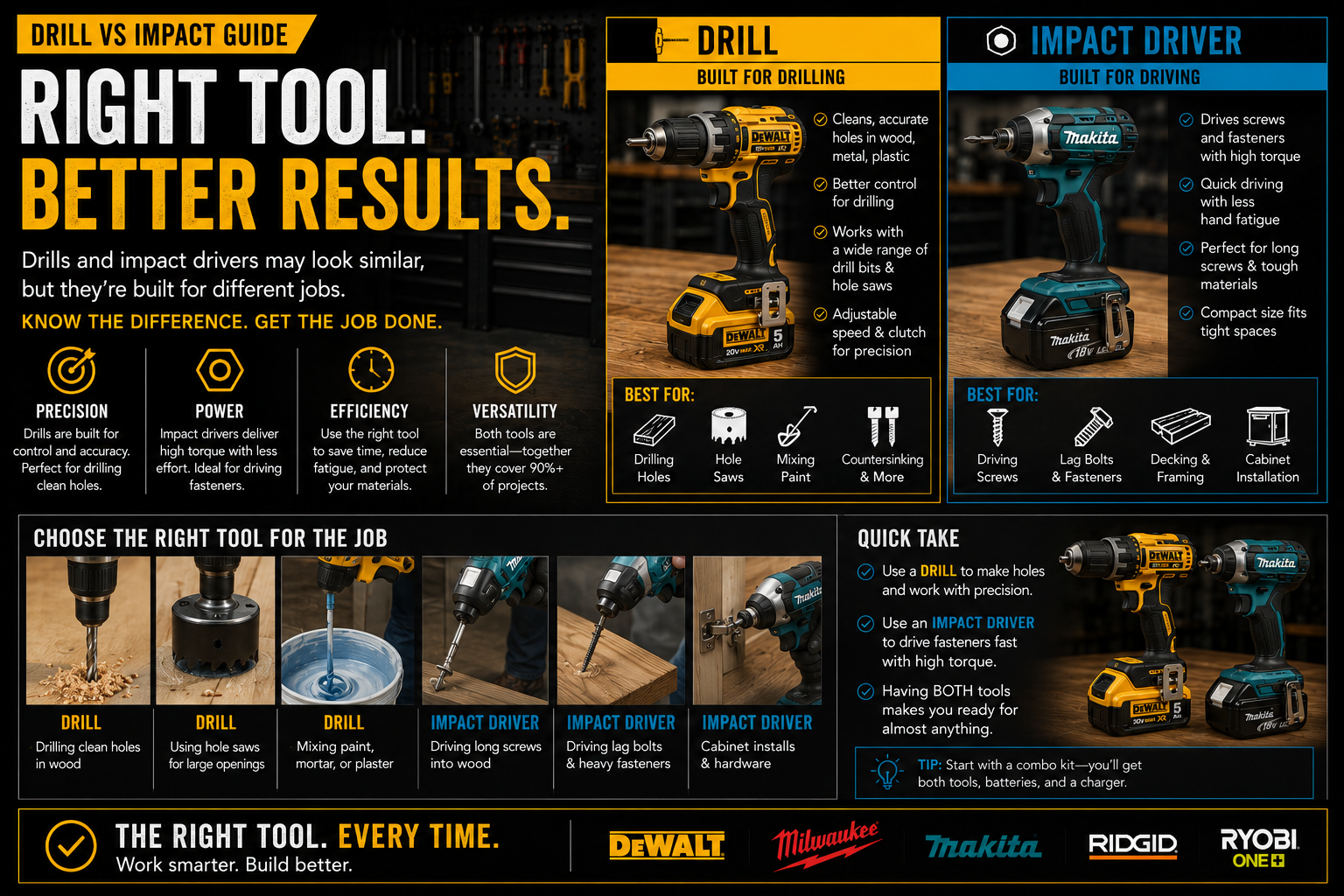
A brushless 18V or 20V-class drill/driver is the safest pick for most homeowners because it balances power, runtime, and platform flexibility. It can drill pilot holes, assemble projects, mount shelves, install hardware, and handle common garage tasks without feeling like a specialty tool.
A compact drill is often the better daily-use tool for overhead work, cabinets, small repairs, and furniture assembly. Do not underestimate comfort. A lighter drill you actually reach for beats a flagship beast that feels like wrestling a caffeinated brick.
Choose a hammer drill if you expect masonry anchors, heavier drilling, larger bits, or tougher remodeling tasks. Just remember that hammer drill mode is for occasional masonry. Heavy concrete drilling belongs to a rotary hammer.
Chuck size, clutch control, variable speed, tool weight, battery size, brushless motor, and platform fit matter more than chasing the highest torque number. Torque is useful, but control and fit decide whether the tool works well in your actual garage.
| Tool Type | Best For | Not For | Garage Bench Co. Take |
|---|---|---|---|
| Drill/Driver | Drilling holes, driving smaller screws, using clutch control | High-volume fastening into framing lumber | The first core tool for almost every homeowner. |
| Hammer Drill | Drill/driver work plus occasional masonry holes | Replacing a rotary hammer for heavy concrete work | Worth it if masonry or heavier drilling is realistic. |
| Impact Driver | Driving screws, lag screws, deck fasteners, construction-style fastening | Precision torque or drilling clean holes | The tool most DIYers wish they bought sooner. |
| Impact Wrench | Lug nuts, suspension work, large nuts/bolts | Wood screws or delicate fasteners | Buy for automotive/mechanic work, not general DIY screws. |
| Cordless Ratchet | Running nuts and bolts in tight automotive spaces | Breaking heavily seized fasteners loose | A speed tool, not a breaker bar replacement. |
| Right-Angle Drill | Tight access drilling and driving | General first-drill duties | A specialty tool after the basics are covered. |
| Compact Drill/Impact | Overhead work, tight spaces, light-to-medium tasks | Heavy boring and large structural fasteners | Often better than flagship tools for real garage comfort. |
Most homeowners should choose an 18V/20V-class drill/driver or compact hammer drill.
Only if masonry or heavier drilling is realistic. Otherwise, a drill/driver is enough.
Yes for light tasks, but 18V/20V is a better primary platform for a garage.
A drill/impact combo kit is usually the better first purchase.
This article was drafted from the Garage Bench Co. topical dominance plan and supported by official manufacturer pages, safety guidance, and buyer-pain research. Before publication, verify exact live product data, affiliate URLs, current prices, availability, and any model-specific specs.