Mistake to avoid
Buying the biggest tool before understanding the job.
Garage Bench Co.
Serious DIY garage workshop guidance
Drills and drivers
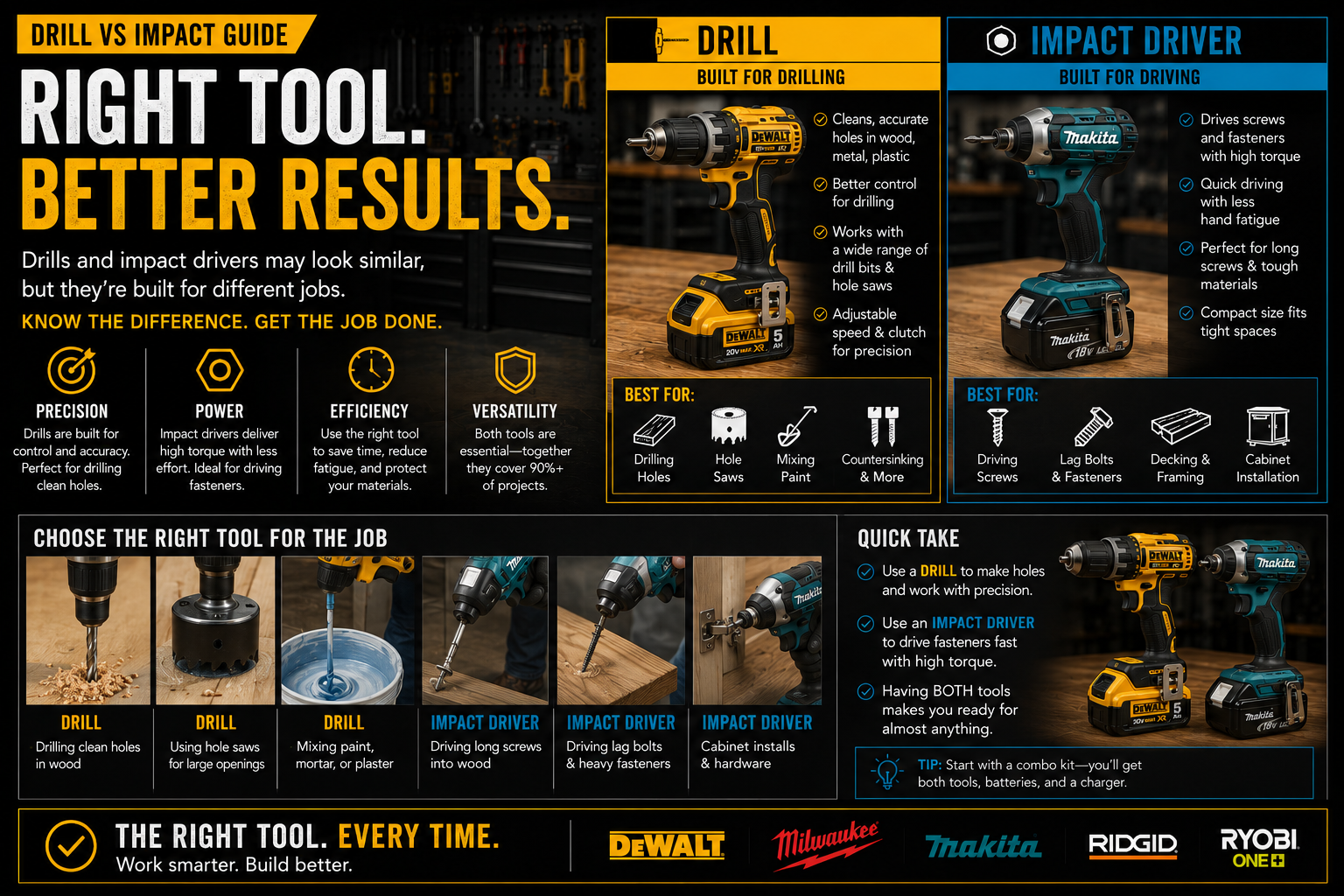
Every starter garage setup should include a drill/driver, impact driver, two to three batteries, charger, impact-rated bits, drill bits, tape measure, level, work light, basic hand tools, and organized storage.
Written by
Who this guide helps
New homeowners and garage builders who want the practical first-tool list.
How to use this guide
Use the quick answer, comparison, and related guides to choose a setup that suits your garage and budget.
Quick answer
Disclosure: some product mentions and Amazon search cards below are affiliate links. If you use one, Garage Bench Co. may earn a commission at no extra cost to you.
Every starter garage setup should include a drill/driver, impact driver, two to three batteries, charger, impact-rated bits, drill bits, tape measure, level, work light, basic hand tools, and organized storage.
This page bridges the cordless platform cluster, garage setup cluster, and core tool cluster.
Start with a drill/driver and impact driver combo kit. Add two to three batteries and a charger. This gives you the foundation for most home projects.
Buy drill bits, impact-rated driver bits, nut drivers, a magnetic bit holder, and a small organizer. Bits are not exciting, but missing the right bit mid-project is how a five-minute task becomes a tiny opera of frustration.
Add a tape measure, level, pencil/marker, work light, extension cord, clamps, and a basic work surface. These tools make the power tools more useful.
Give the tools a place to live early. Wall storage, a small tool chest, or a charging shelf keeps the setup from turning into a drawer full of mystery bits and regret.
Compare equipment types in our topic overview. Then use the advice here for your specific decision.
A drill/driver and impact driver combo kit is the best starting point.
Two is the minimum; three is better for regular projects.
Drill bits, impact-rated bits, nut drivers, and bit storage.
Yes. Good lighting makes almost every project easier and safer.